Corporate clients, hotels and partners
How a company that drives its employees works, how a hotel booking for guests works, and how all of it lands on one monthly statement with a cost centre.
Part of the work does not come from passengers on the street. Companies drive employees, hotels drive guests, hospitals drive patients — and they all want the same: know in advance what I may spend, and get one invoice with the list of rides at the end of the month.
Corporate accounts
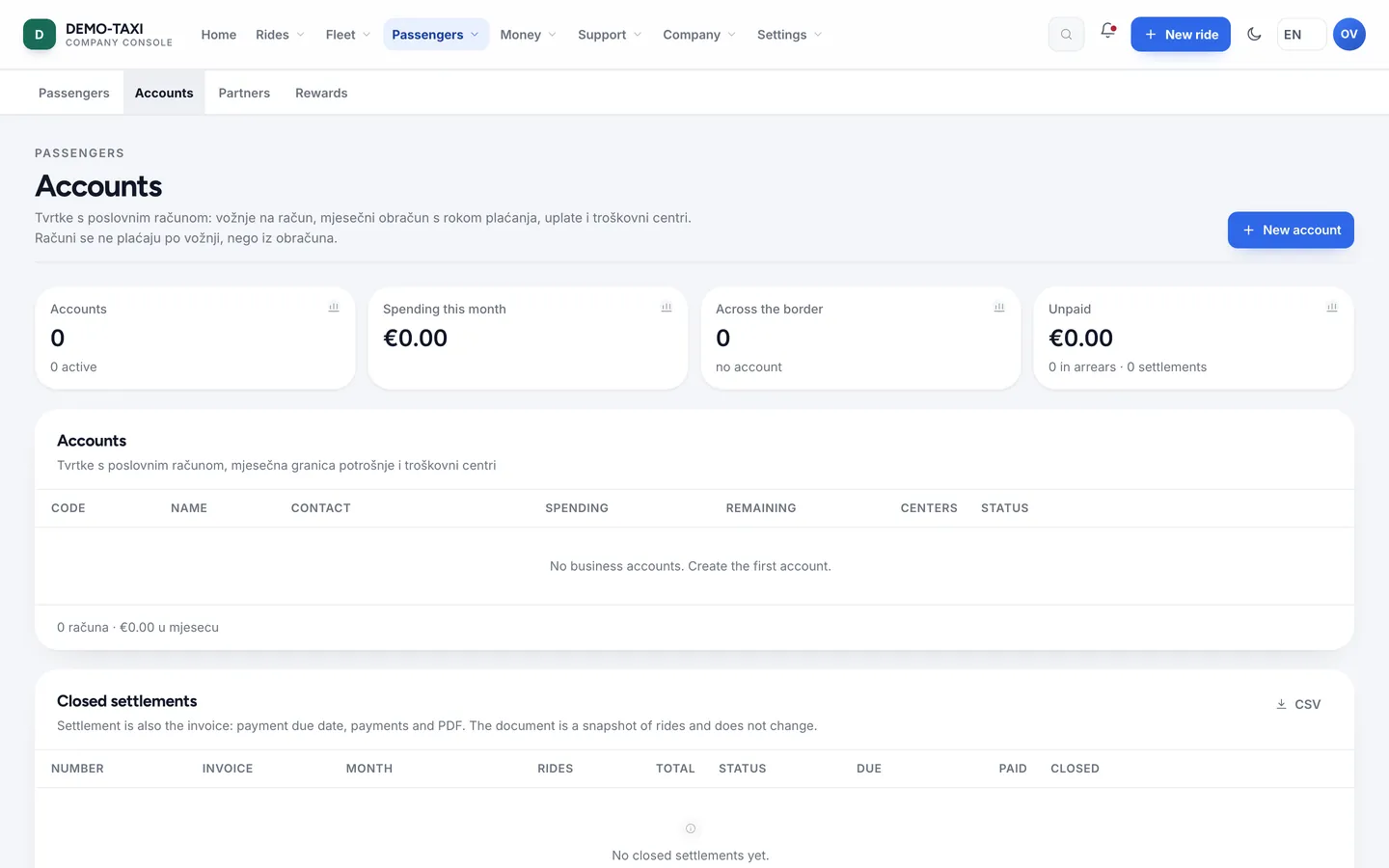
A corporate account is an agreement between the taxi company and a client company. Rides are not paid in the vehicle: they collect on the account, and the client company pays monthly, with the option to tie each ride to a cost centre (department, project, branch).
- Ride approval: the client company can require a ride to be approved before the driver sets off.
- Cost centre: the department or project the cost is booked to; without it the ride is booked to the company.
- Monthly statement: the list of rides, amounts and cost centres, in a form accounting can import.
- Limit: the client company can have a monthly cap; once reached, rides are refused or need approval.
Hotels and partners
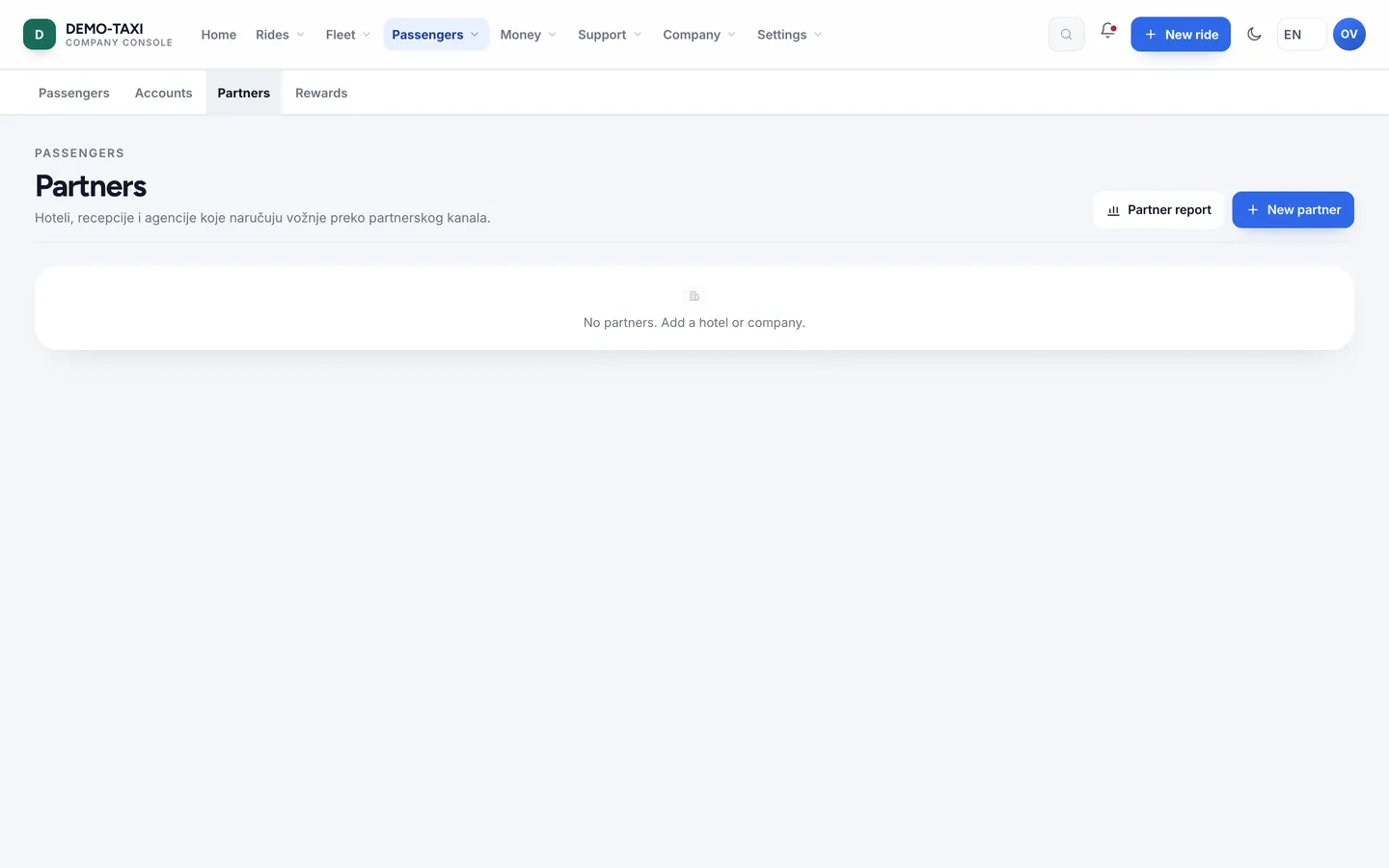
A hotel or an agency books for a guest, often without the passenger having an account in the app. In that case the booking comes through the hotel system, a web form or the phone, and the console shows who brought the ride and how many there were.
| Booking channel | When it is used |
|---|---|
| Integration (API) | The hotel system books itself when a guest announces arrival; nobody is on the phone. |
| A web form | A smaller hotel or apartment books from a browser, without software of its own. |
| Phone | When something is agreed specially (several vehicles, waiting, a group). |
What the taxi company sees in settlement
- Revenue per client: how many rides and how much money went to which account.
- Unpaid amounts per client and period, with a due date.
- Rides without approval or over the limit — the places where money leaks, so they are shown separately.